
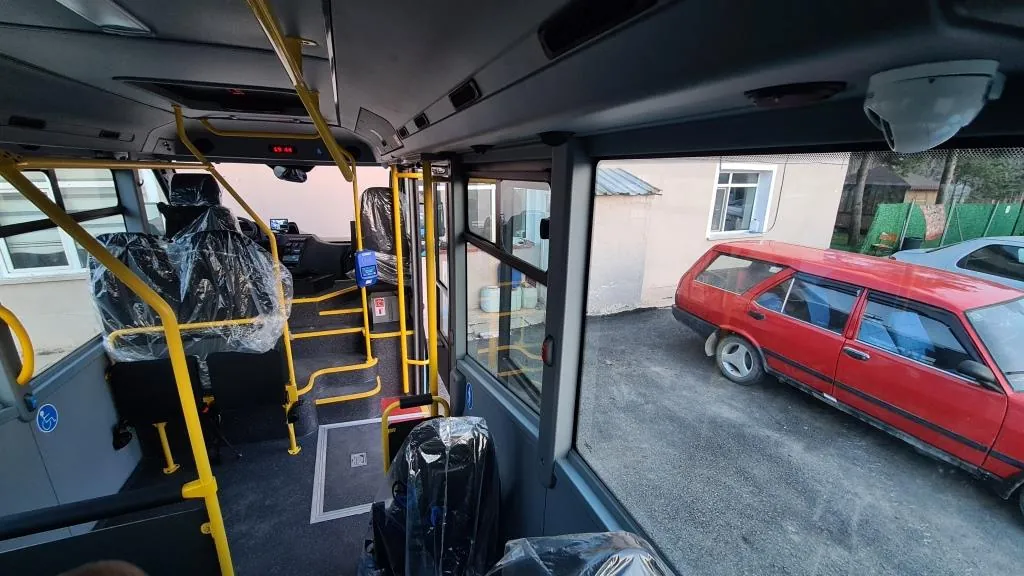
The project's need
After the akbil system went live in Susuz Municipality, the fare side was on the record; but the vehicle itself was still an unrecorded space. The municipality wanted this project to solve three things:
A vehicle became invisible once it left the depot. In a small town, vehicles operate far from the centre all day. Where a vehicle was, and how a trip was going, could only be learned by phoning the driver.
There was no footage after an incident. In an on-board dispute, fall or damage claim only the parties' statements remained; the municipality had no objective record to vindicate either its staff or the passenger.
The door area was a blind spot. What happened around the door during boarding and alighting was limited to what the driver could see in the mirror.
Why a professional in-vehicle DVR system was chosen
A public transport vehicle imposes conditions a consumer dashcam cannot handle: constant vibration, a wide temperature range, power cut with the ignition, and continuous recording for most of the day. A professional in-vehicle DVR (mobile recorder) architecture was therefore installed in Susuz as well - the same structure as the system running at Gerede Municipality. Recording is held not inside a single camera but on a central recorder fixed in the vehicle, with cameras working as endpoints connected to it. Channel count can be increased, recording duration planned according to disk capacity, and the failure of one camera does not lose the entire recording.
The general structure of the system
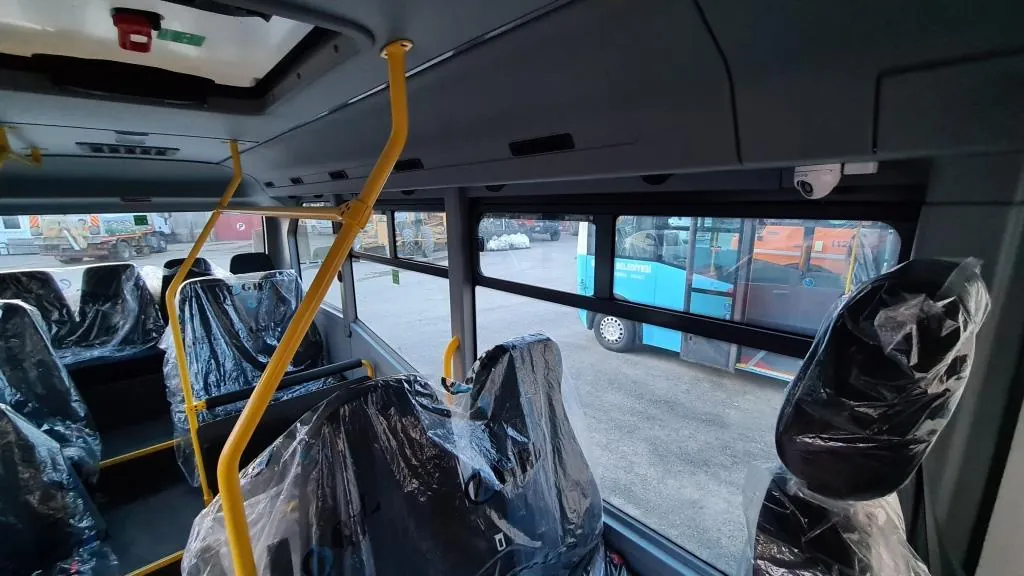
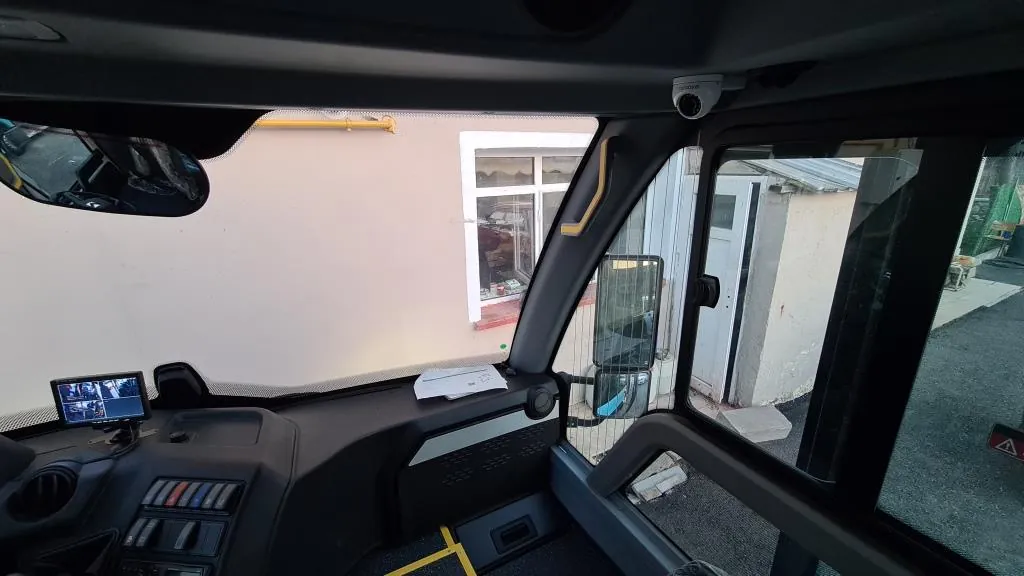
- Camera layer: Interior and exterior cameras were positioned on the vehicle; interior cameras cover the passenger cabin and door entrance, exterior cameras the surroundings and direction of manoeuvre. Mounting points were chosen on rigid surfaces where vibration would not degrade the image.
- Recording layer: All channels come together on the DVR recorder in the vehicle. It is powered from the vehicle's electrical system and starts recording and shuts down safely according to ignition state; files are not corrupted by a sudden cut.
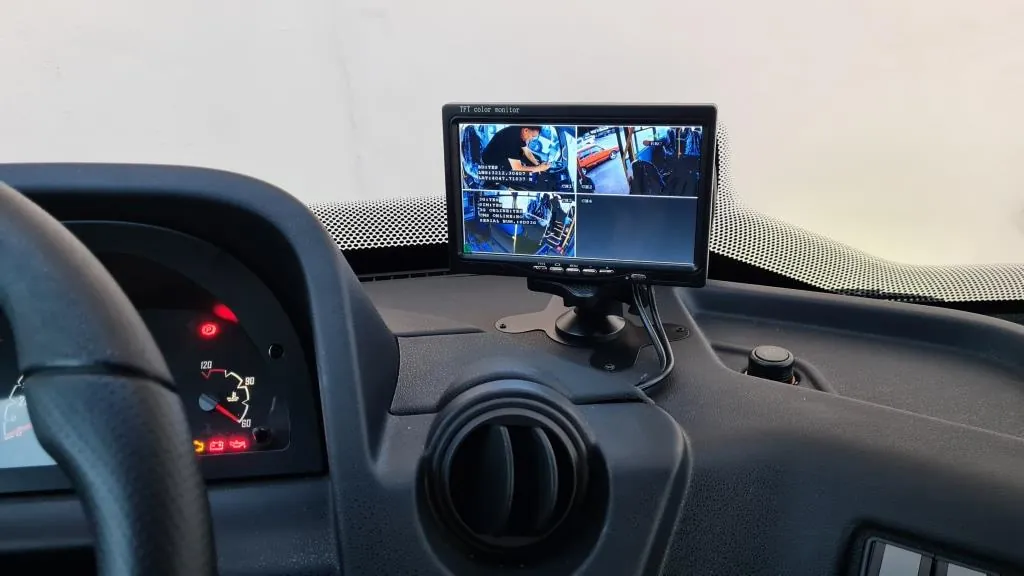
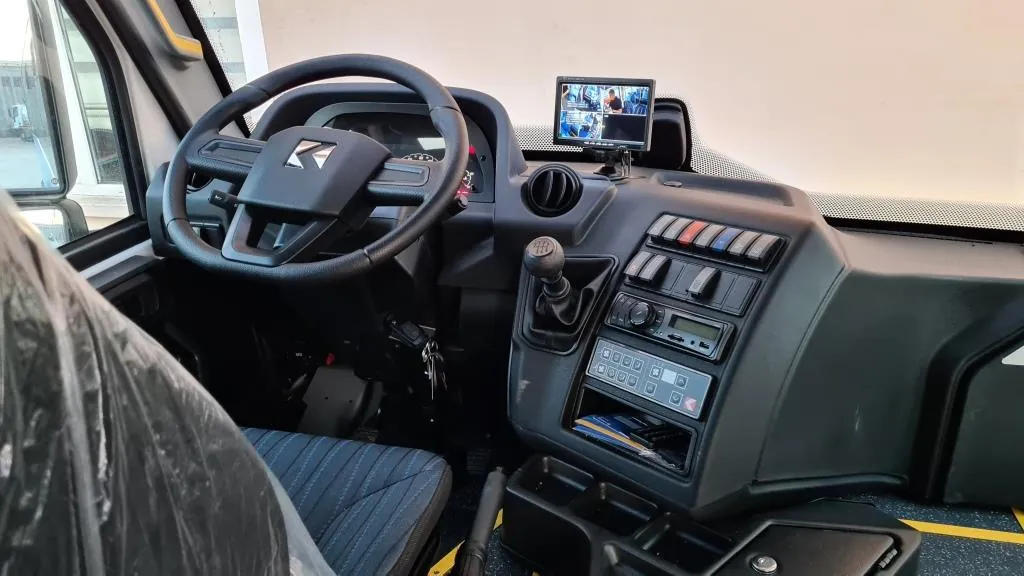
- Monitoring layer: The monitor on the driver console shows all channels in a split view. In addition to the mirror, the driver also sees the door area and direction of manoeuvre on screen.
- Remote access layer: The recorder is connected to the centre; the live view of vehicles can be reached both from a phone and from a computer at the centre.
Live monitoring: mobile app and central server
This was the decisive aspect for Susuz: because vehicles operate far from the centre, the system was not built as "a recording reviewed afterwards" but together with live monitoring capability. There are two access paths:
- Mobile application (APK): Authorised staff can open the live camera view of vehicles from an application installed on their own phone. An official in the field can see a vehicle's current state without returning to the centre.
- Server software at the centre: A monitoring program installed on a server at the municipal centre provides access from a computer to both the live view and past recordings, with the channels of several vehicles watched together on a single screen.
Our assessment: on small fleets operating far from the centre, the value of live monitoring is not constant watching but the absence of delay at the moment it is needed. When a report comes in, the vehicle's state is seen within seconds; there is no need to wait for it to return to the centre.
Making the record auditable
Because footage is stored with date and time, when a complaint or damage claim arrives the relevant time range can be located and reviewed directly. Footage is viewed only by authorised staff and only for the incident in question; the system was positioned not as a means of continuous surveillance but as a record consulted when needed. That was a deliberate choice for the privacy of both passengers and staff.
The benefit delivered
- The vehicle is visible even far from the centre. Thanks to live monitoring its state can be checked instantly from a phone or from the centre.
- Disputes are resolved with footage, not statements. On-board incidents, damage and complaint claims are settled against an objective record.
- The door and manoeuvre blind spot is closed. The driver also sees the boarding area on screen - a direct safety gain.
- Staff are protected too. Against unfair accusations the driver also has a record; the system is not a one-sided monitoring tool.
- An installation built for vehicle conditions. Vibration, temperature and ignition-driven power cuts were taken into account with a professional DVR architecture.
Working alongside the akbil system
The camera system was installed as a complement to the Susuz akbil system running on the same fleet. The akbil side answers "which card passed on which vehicle at what time"; the camera side answers "what happened on the vehicle at that moment". Together they let the municipality reach both the transaction record and the footage of an incident under the same timestamp.