
The project's need
In the Kargi district of Corum, public transport runs on a mixed structure in which buses and minibuses are used together. That mixed structure produced an inconsistency a cash system could not resolve:
The same journey could be charged differently depending on the vehicle boarded. When buses and minibuses each collected cash separately, there was no way to verify that the tariff was applied uniformly in the field. For citizens, that meant an unpredictable service.
There was no single revenue picture for the whole fleet. Because each vehicle collected its own takings, no record emerged that showed the district's public transport revenue as a whole.
Applying a tariff by card type was impossible. Verifying a student or discounted tariff on board came down in practice to the driver's initiative.
Why an akbil system was chosen
Kargi's priority was tariff uniformity. In a card system the fare is set neither by vehicle type nor by the driver's decision, but by the tariff defined for the card type. On a mixed fleet where buses and minibuses work side by side that was reason enough on its own: the same card is processed under the same rule whichever vehicle is boarded. The service thus became predictable for citizens and measurable for the municipality.
The general structure of the system
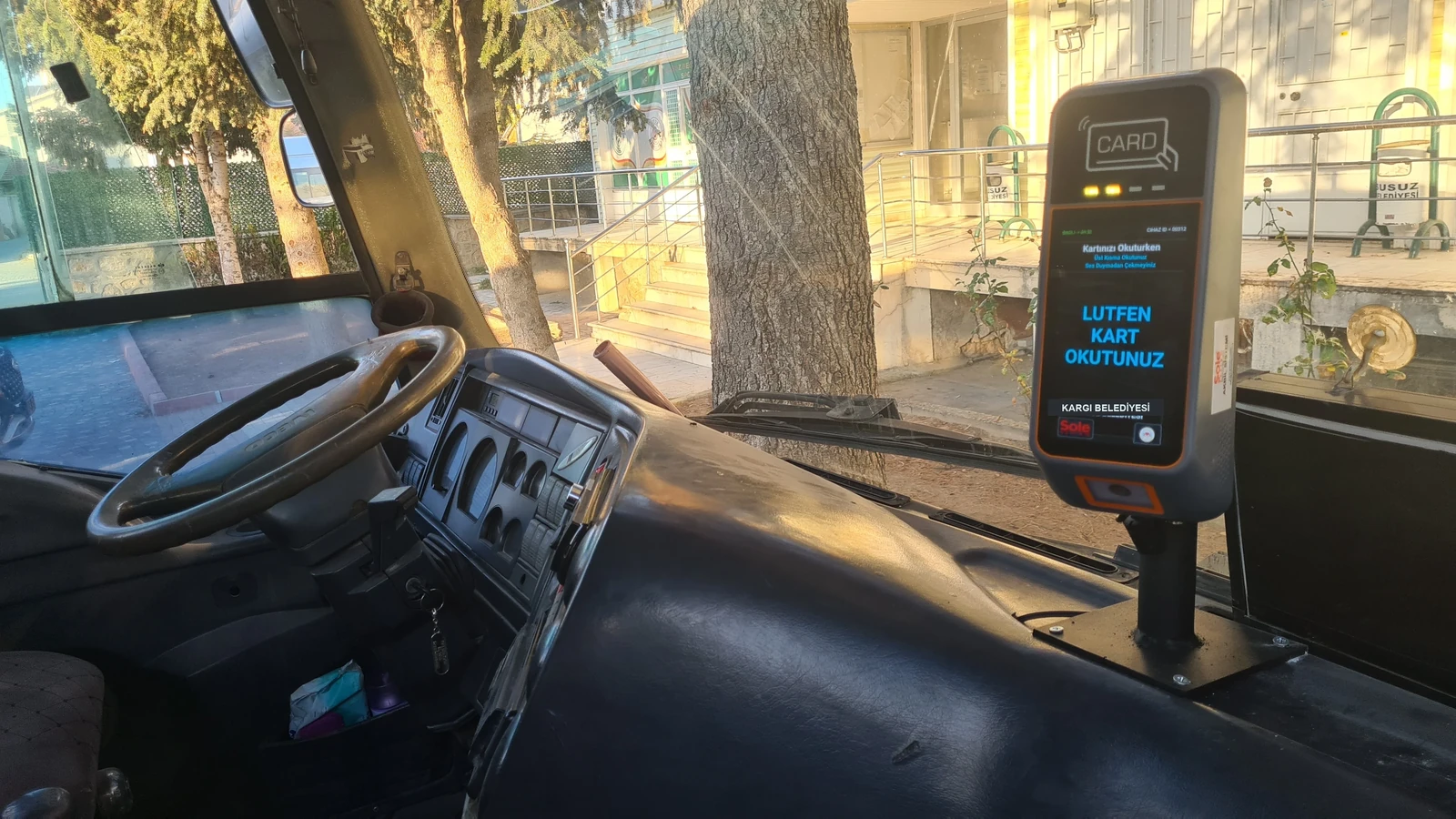
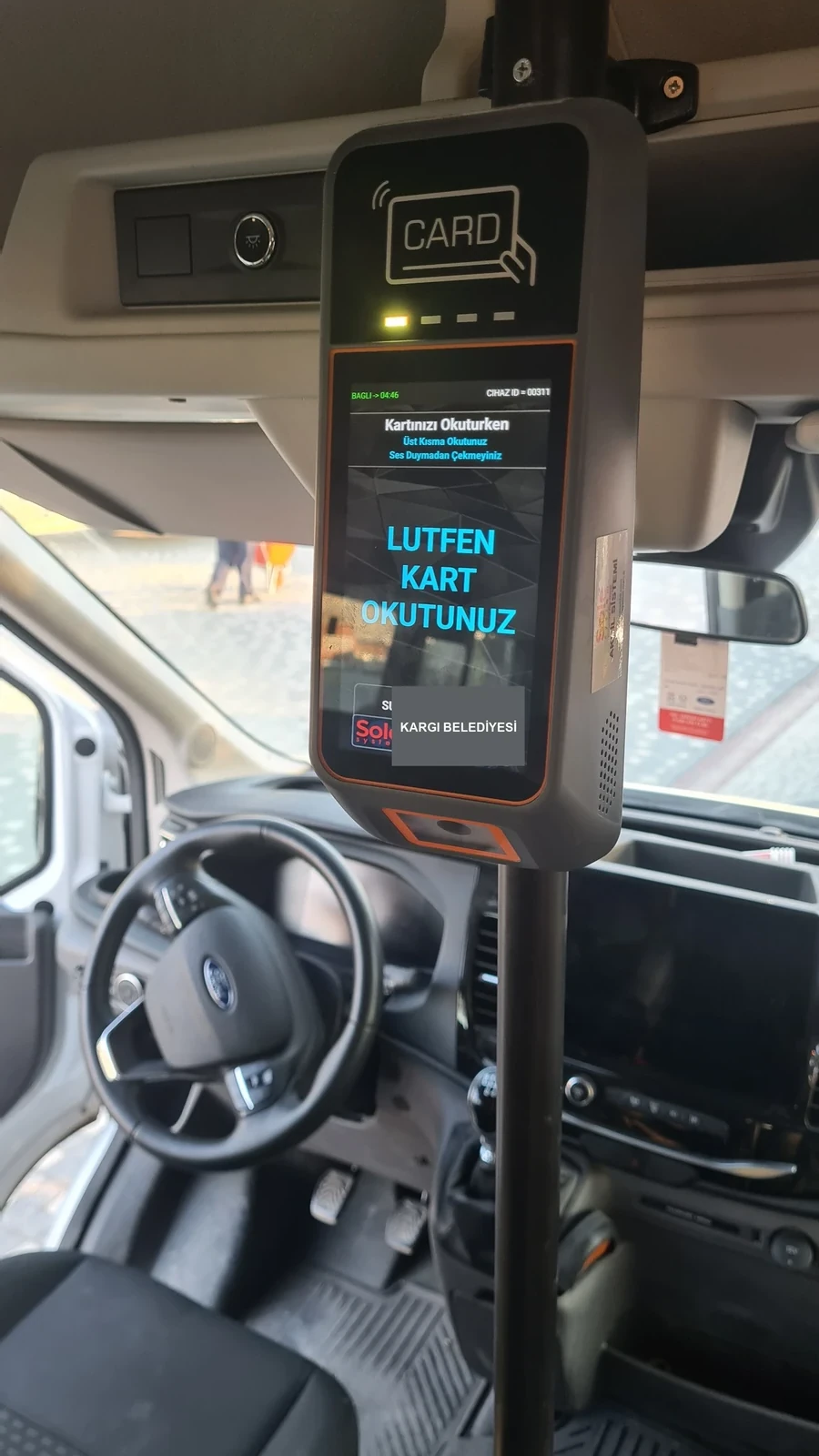
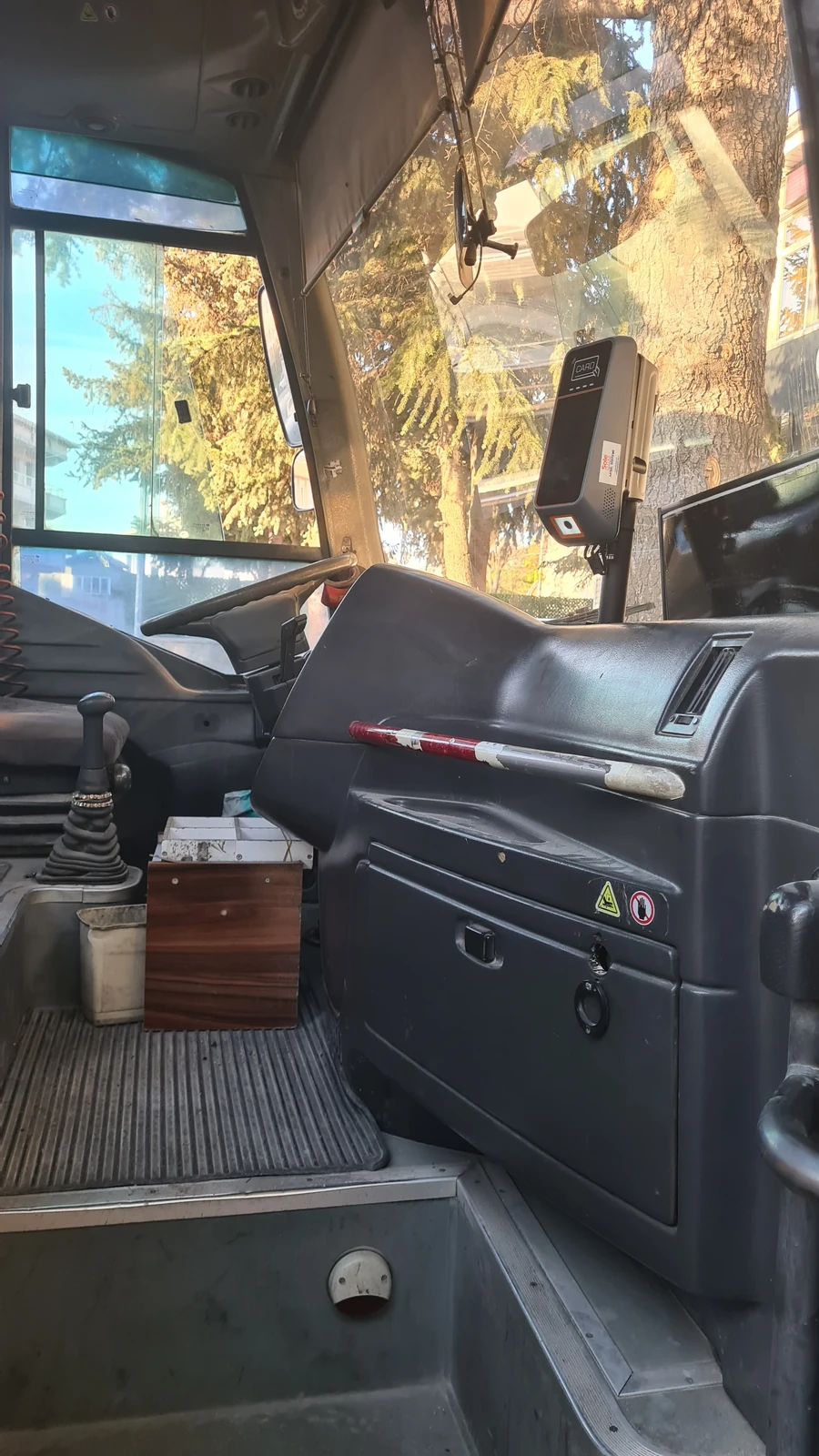
- Vehicle layer: Sole validators were mounted on all buses and minibuses. Regardless of vehicle type the devices work from the same tariff table; the fare is not calculated on the device but read from the value defined for the card type.
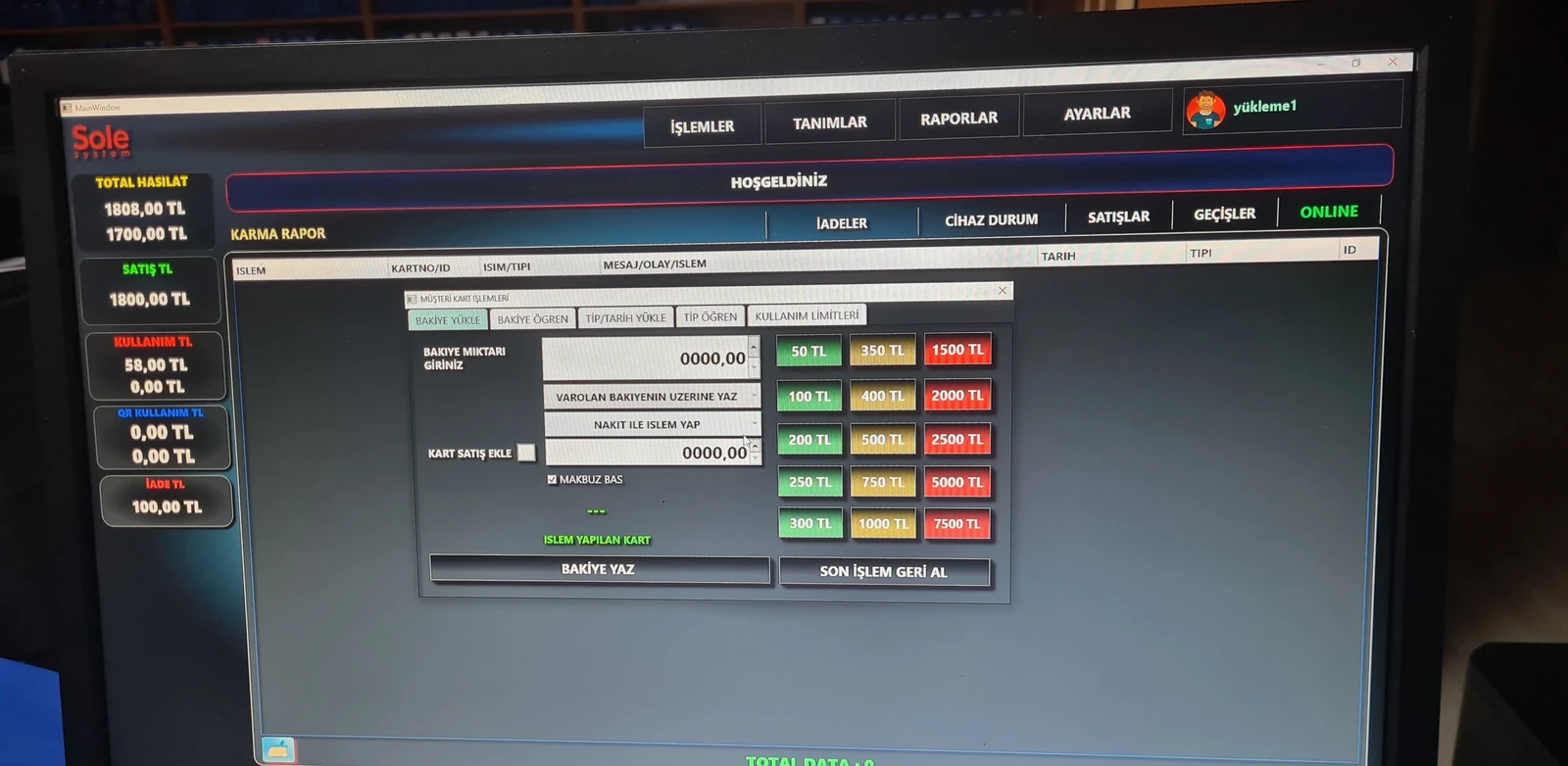
- Top-up layer: Balance loading is done from a single point designated by the municipality and every transaction is documented with a receipt.
- Central layer: Tariffs and card types are defined centrally; a tariff change reaches the whole fleet at once. Even if a vehicle loses connectivity it accepts the passage and relays it once the connection returns.
Every transaction being traceable
Every boarding is recorded together with card, vehicle, time and tariff. On a mixed fleet this carries extra value: the municipality can now see whether passengers prefer the bus or the minibus, and which vehicle type is busier at which hour. That data is used to decide which route is more efficiently operated with which vehicle. The balance on a lost card can be frozen and transferred to a new one.
The benefit delivered
- The tariff is applied uniformly across the fleet. The fare does not change by vehicle or by driver.
- The district's transport revenue is seen in one picture. Bus and minibus takings are reported as a whole, not separately.
- Demand can be measured by vehicle type. Which route is run with which vehicle is decided with data.
- The load on the driver is lighter. Taking money, giving change and judging discounts left the vehicle.
- Tariff updates from a single point. Changes are made centrally, without visiting vehicles one by one.
Carrying the card beyond transport
Kargi Municipality's card is a municipal card assigned to the citizen; transport is only the first service. The same card can later be used at a sports facility entrance, a cultural centre, a public canteen or a library. Because each service is defined and reported separately in the system, all services the municipality offers are managed through a single identity.