
The Project's Need
Gerede Municipality ran its city public transport entirely on cash, and that setup created difficulty on three fronts. Tracking the money: at the end of the day all you have is cash in a till; which route, which vehicle and how many passengers it came from is not recorded — route and fare decisions rested on guesswork rather than data. Driver-related errors: the driver was simultaneously driving, collecting fares, giving change and trying to judge student/discounted eligibility by eye; at peak hours this inevitably turned into incorrect collection and disputes. Operational chaos: small change, collecting cash from each vehicle, counting and till reconciliation were a significant staffing and cost burden.
In the same period the municipality also needed video recording in vehicles for security and oversight; both needs had to be solved on the same fleet, in a single project.
Why an akbil system was chosen
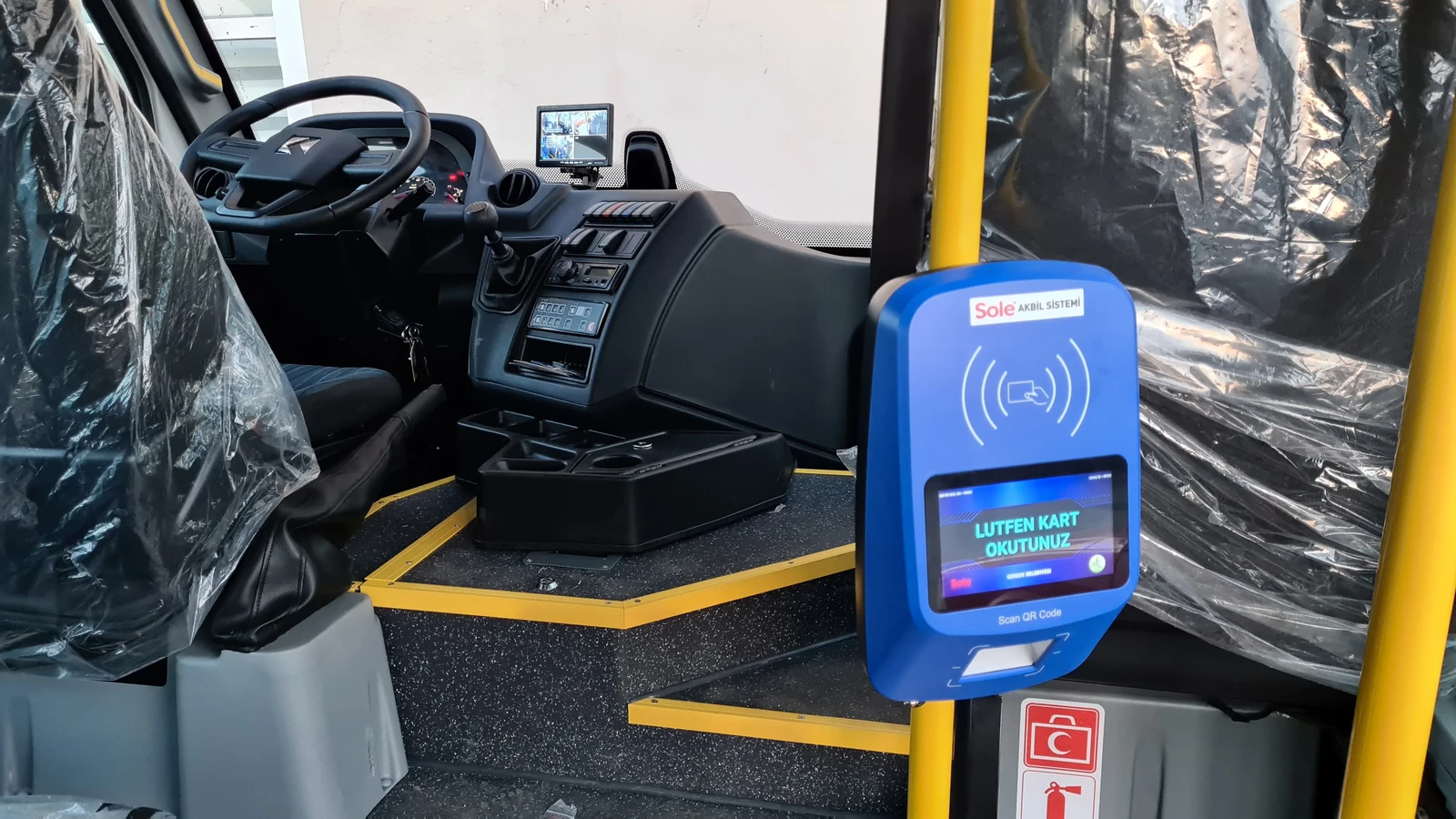
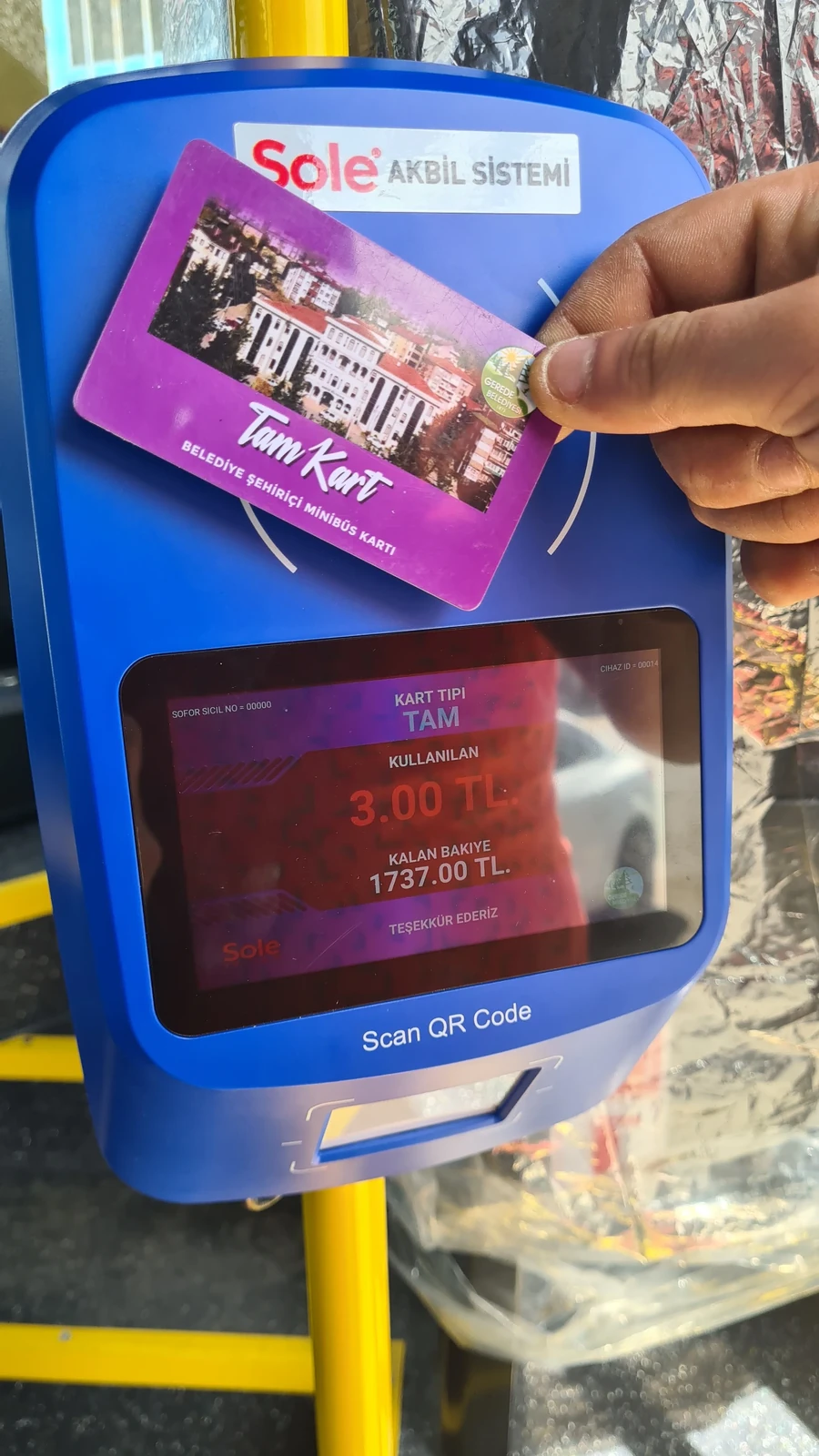
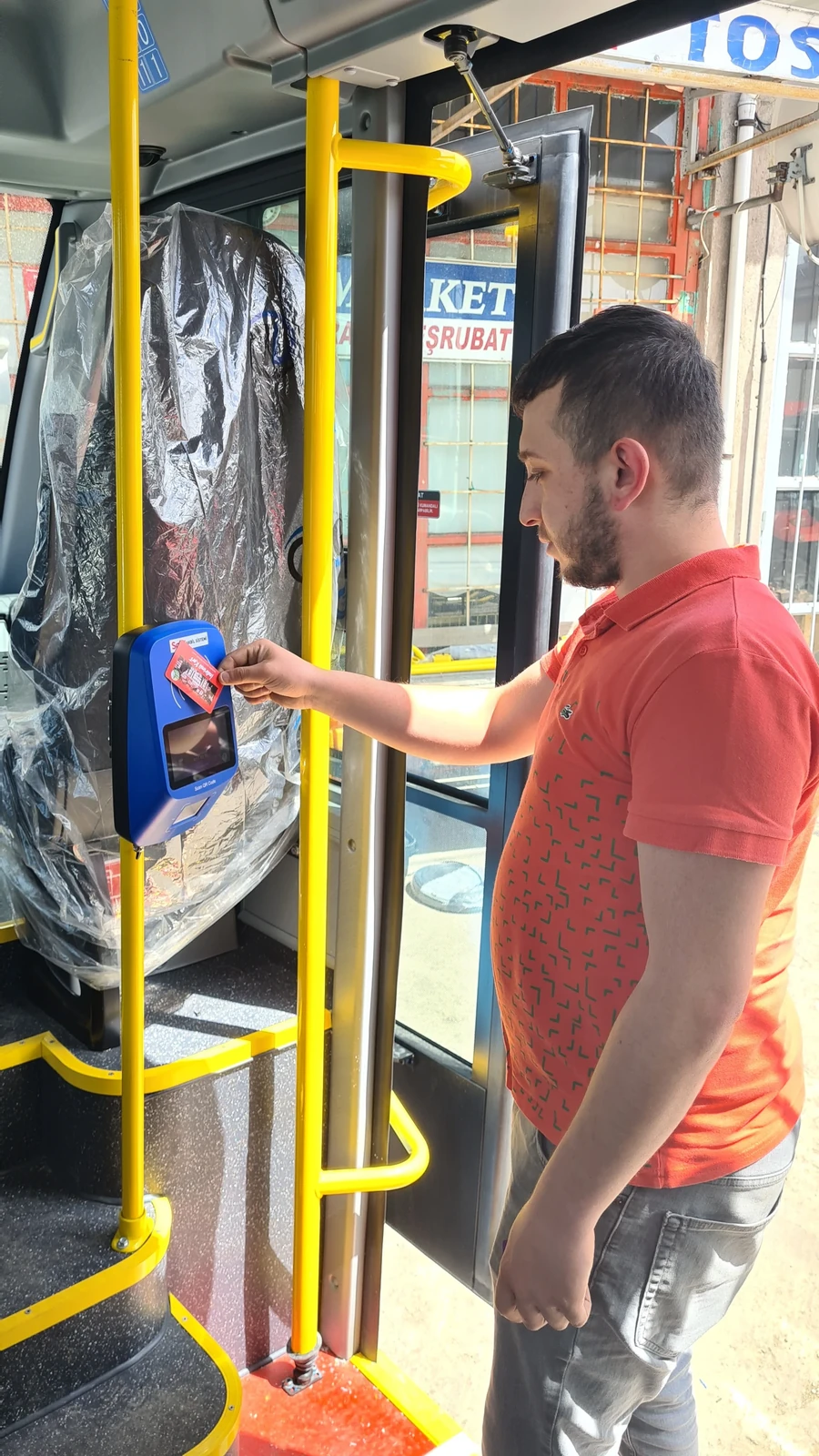
The akbil system was chosen because it solves all three problems with a single architecture. The core logic: money is no longer collected on the vehicle — it is loaded onto the card centrally. The passenger tops up their balance at the municipality's top-up points; when they tap the card on board, the fare is calculated automatically by card type (full/student/discounted) and confirmed with a voice alert. The driver's role in setting fares, handling cash or judging discounts disappears entirely.
This single change transforms the whole chain: because money is collected at one point, counting and reconciliation reduce to one point; because the tariff is defined centrally, an incorrect fare cannot be applied on the vehicle; and because discount eligibility lives on the card itself, it stops being a matter of dispute.
Overall system architecture
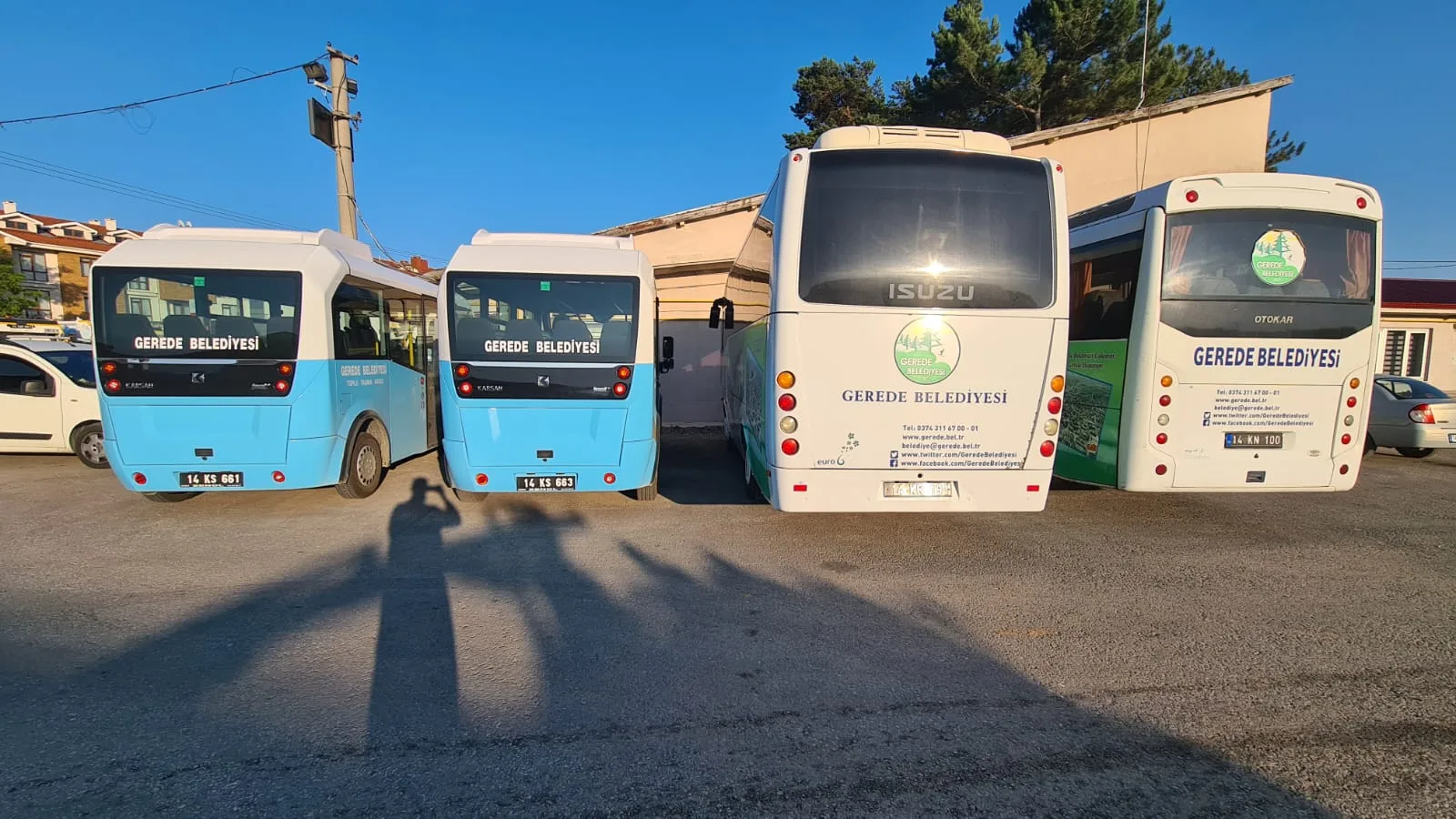
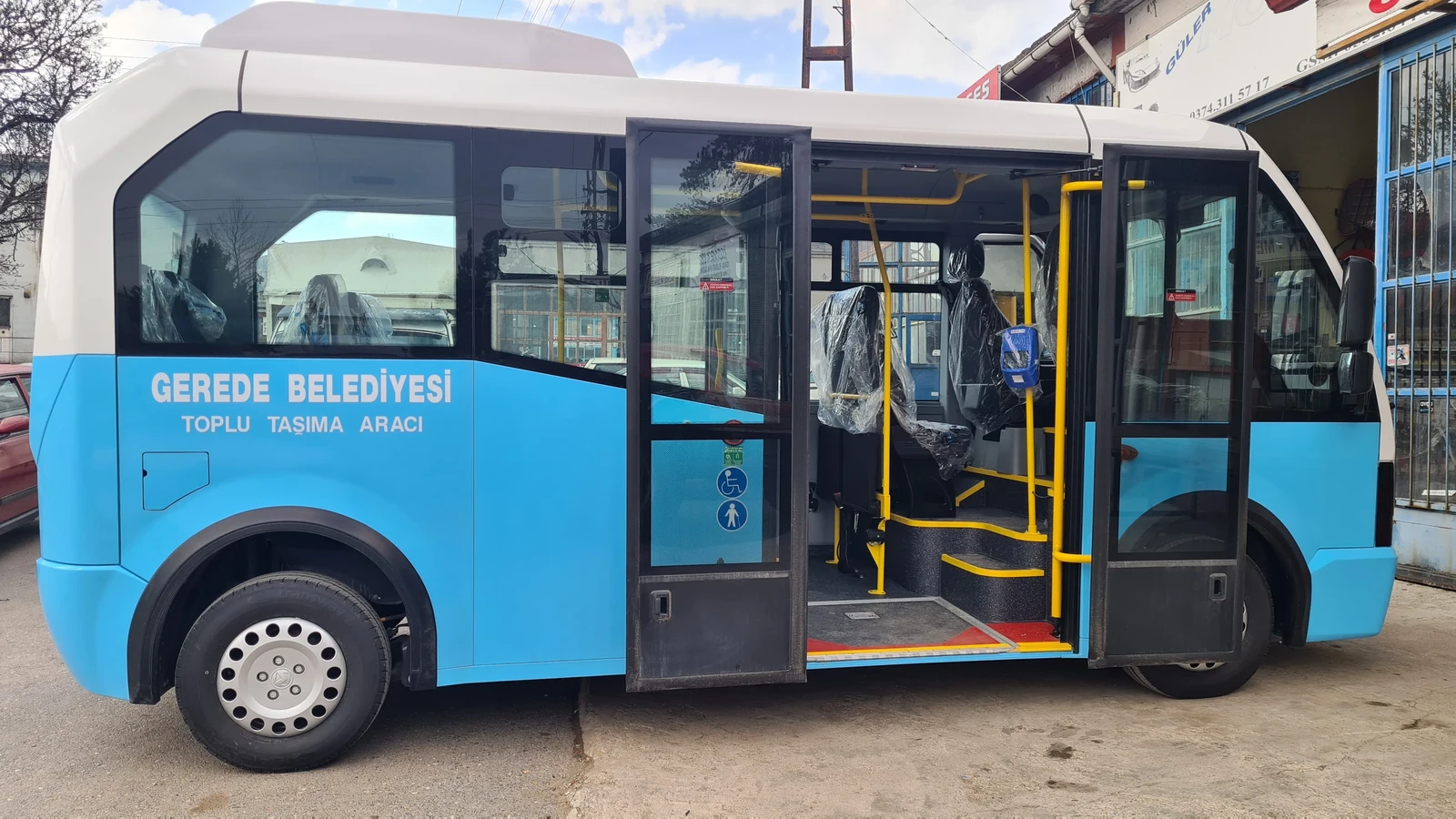
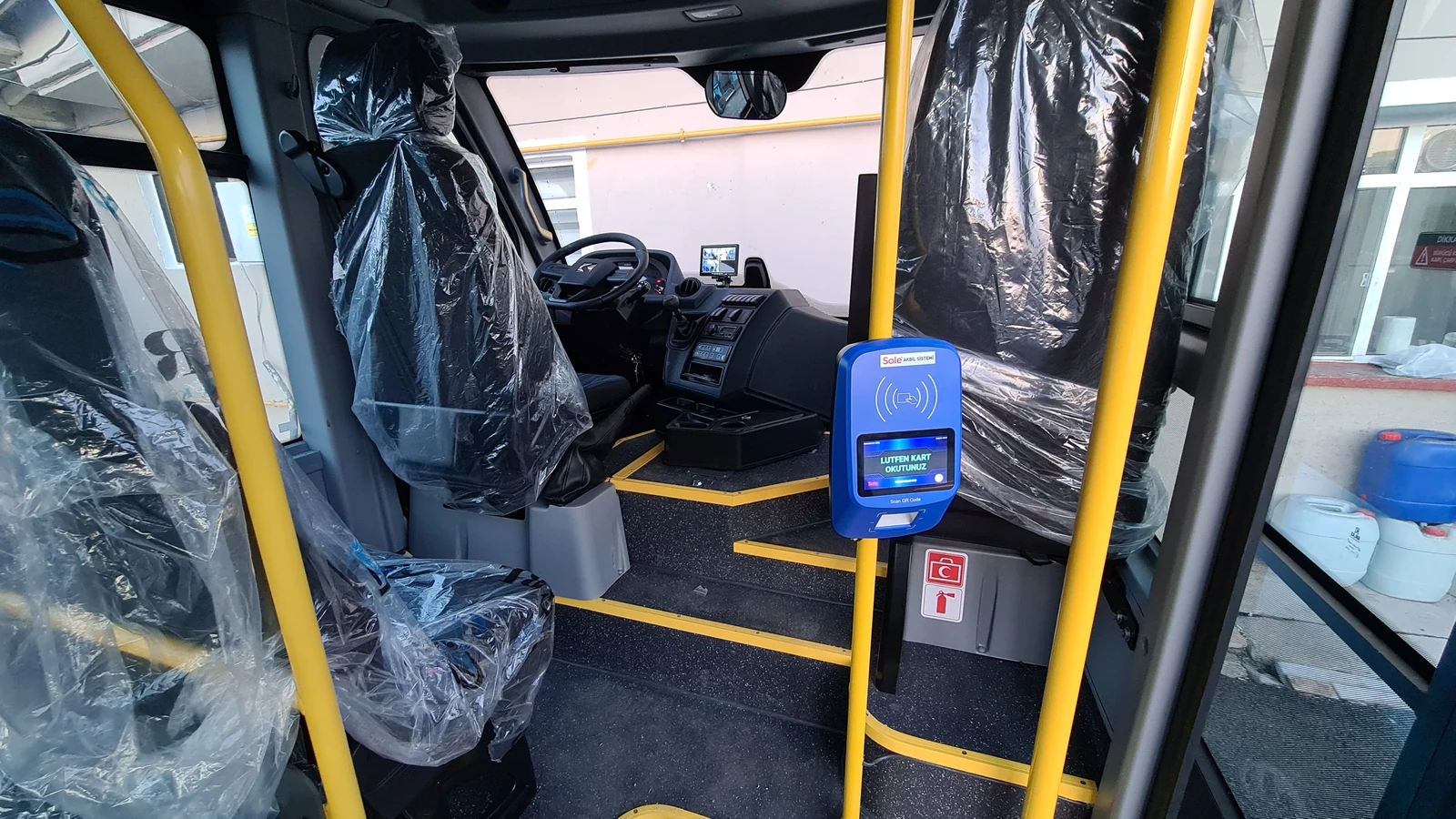
- Vehicle layer: A Sole akbil validator was mounted in every vehicle; it reads the card, applies the fare and updates the balance. It keeps working even if the internet drops, and syncs automatically once the connection returns.
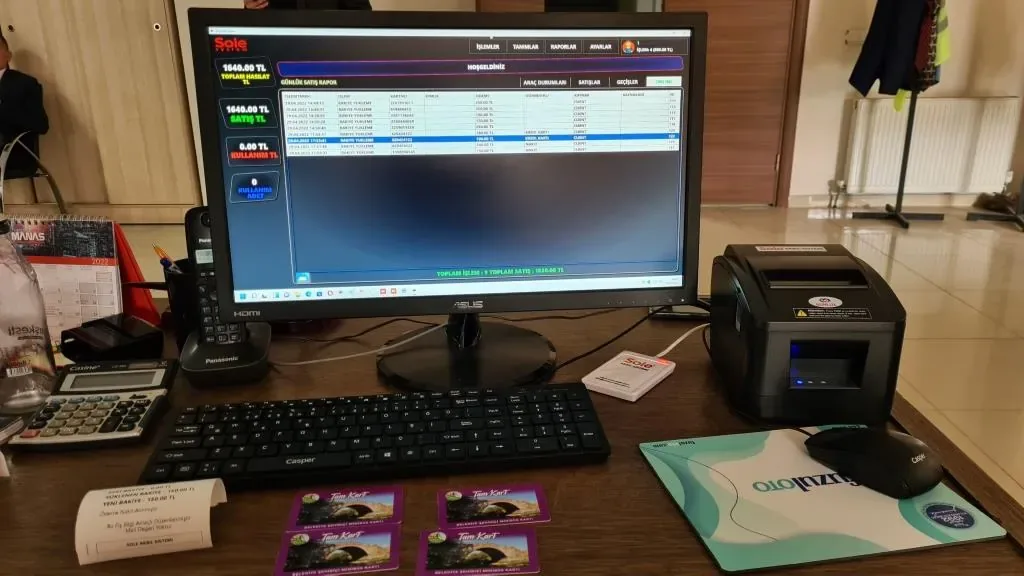
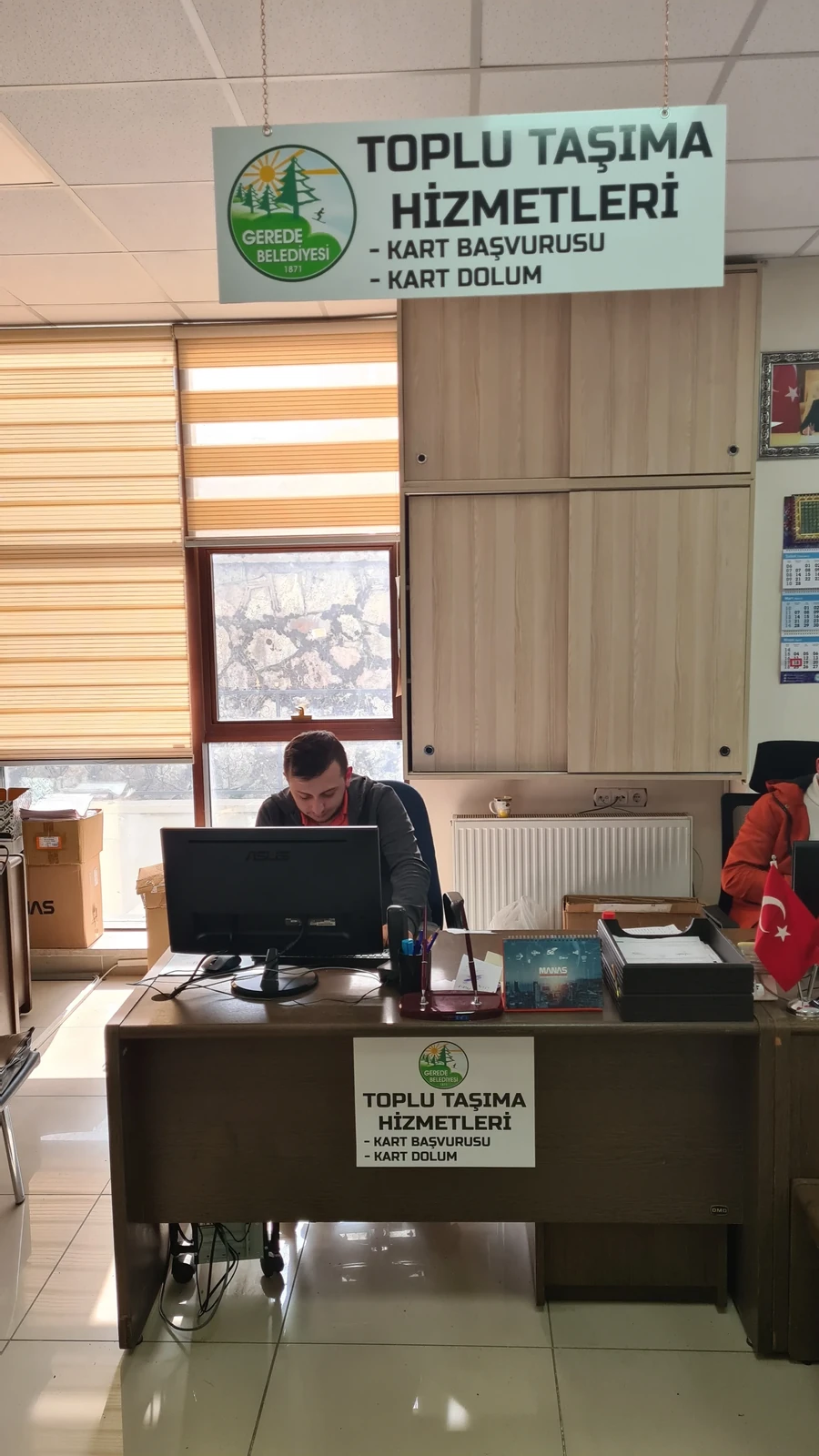
- Top-up layer: Balance is loaded, new cards are issued and lost cards are cancelled at designated top-up/sales points — this is the single entry gate for the money flow.
- Central layer: Data from all vehicles flows to the central software over SIM internet; tariffs, reporting, card management and reconciliation are run from one panel.
In-vehicle and exterior cameras were activated in the same installation. Our assessment: installing the akbil and camera systems together, in one pass with one crew, was the right call — it reduced both cost and per-vehicle mounting time.
Every transaction is traceable
Which card, on which vehicle, at what time, at which tariff — every passage is recorded individually, and so are balance top-ups. Because records are kept as an immutable transaction ledger, the revenue figure in a report is the sum of individual passages. Revenue reconciliation therefore becomes verifiable data; the municipality can report passages by plate and driver and evaluate route performance with real numbers.
The Benefit Delivered
- Revenue leakage eliminated: Fare collection became cashless and fully recorded.
- Burden lifted off the driver: Taking cash, giving change and judging discounts left the driver's responsibility; driving safety benefited too.
- Operating cost fell: Vehicle-by-vehicle cash collection, counting and till reconciliation collapsed into a single centre.
- Actionable data emerged: Real passenger and revenue data by route/trip/hour became usable for tariff and schedule planning.
- Social policy became enforceable: Student and discounted tariffs live on the card, so everyone entitled uses their right — and only those entitled.
The same fleet also received an in-vehicle and exterior camera system — see Gerede Municipality Camera System.
Extending the card beyond transport
The infrastructure is ready from day one to turn the card into a city card: the same card can be used at sports hall and swimming pool entrances, municipal cafeterias, library membership and cultural centre events. Citizens carry a single card, and the municipality sees all service usage from the same panel. Adding a new service does not require replacing the cards — the existing card is simply enrolled.
Card designs
The city minibus cards designed for Gerede Municipality. Card types are visually distinct, so both passengers and inspection staff can recognise a card at a glance.