
The project's need
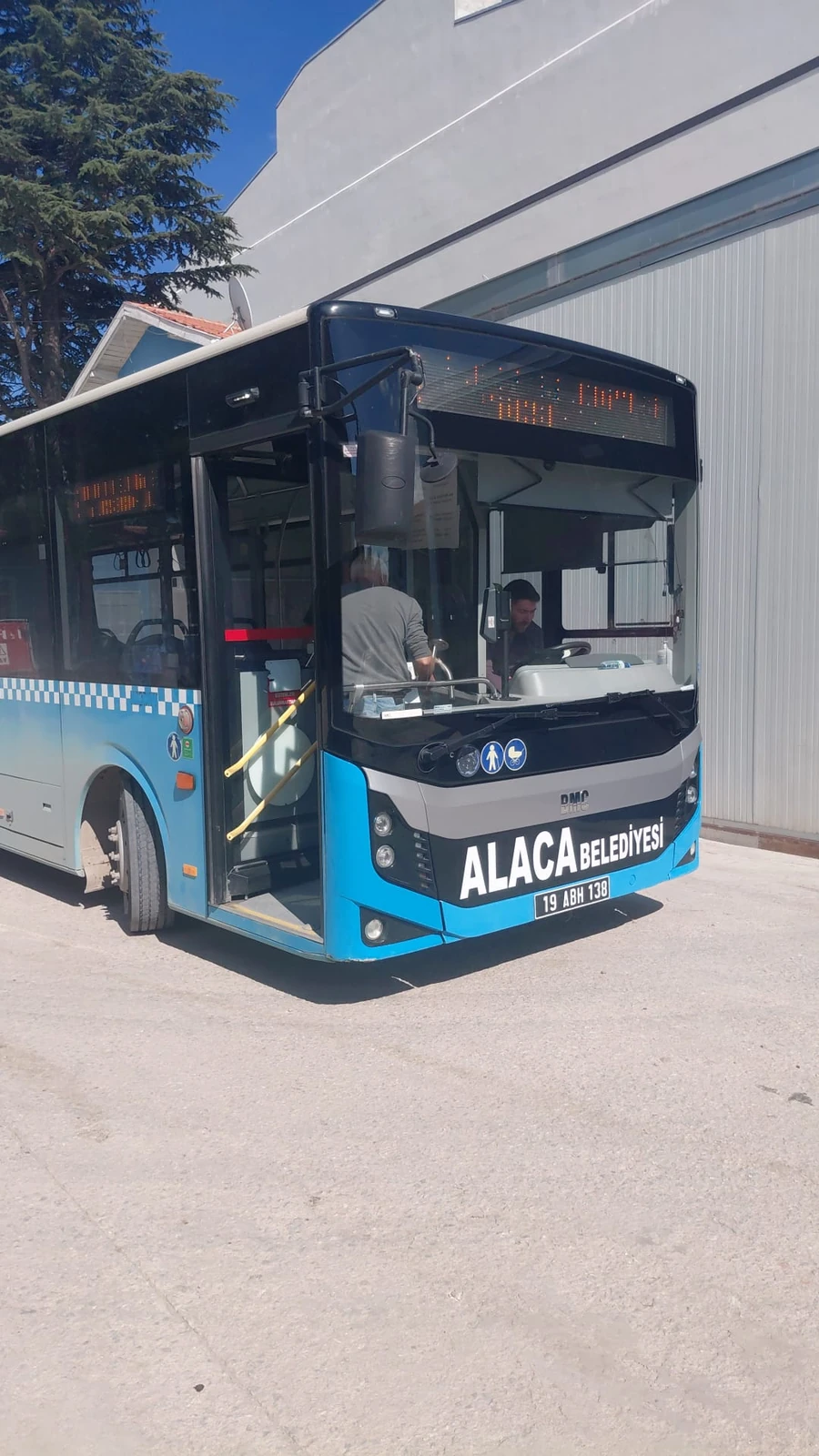
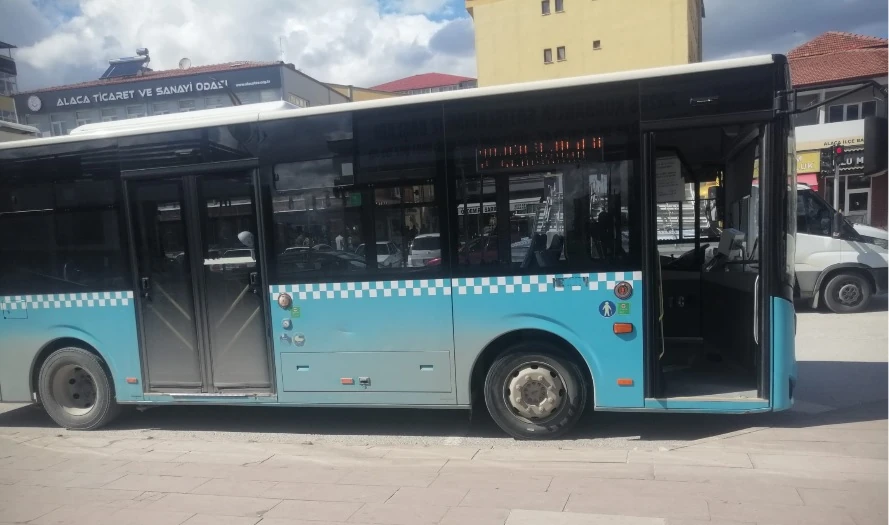
In the Alaca district of Corum the municipality had renewed its public transport fleet, building a modern service with low-floor vehicles carrying LED destination signs. Fare collection, however, had been left behind by that renewal:
A modern vehicle with old collection. Although the vehicles themselves had been renewed, fares were still collected in cash. That contradicted the service quality passengers perceived and made it impossible to measure the return on the investment - the municipality could not show whether the new vehicles were actually carrying more passengers.
Top-ups left no document. When a citizen loaded money onto a card, no proof remained in their hands. Any balance dispute turned into one person's word against another's.
Three tariffs were managed by hand. Distinguishing full fare, student and free-travel passengers was done on board by the driver, which was both slow and inconsistent.
Why an akbil system was chosen
The starting point in Alaca was bringing fare collection up to the level of the renewed fleet. Continuing with cash collection on new vehicles would have meant modernising the visible part of the investment and leaving the invisible part untouched. Once the card system was in place, vehicle, tariff and revenue became parts of the same whole; the municipality can now answer "how many passengers do the new vehicles carry" with a concrete figure.
The general structure of the system
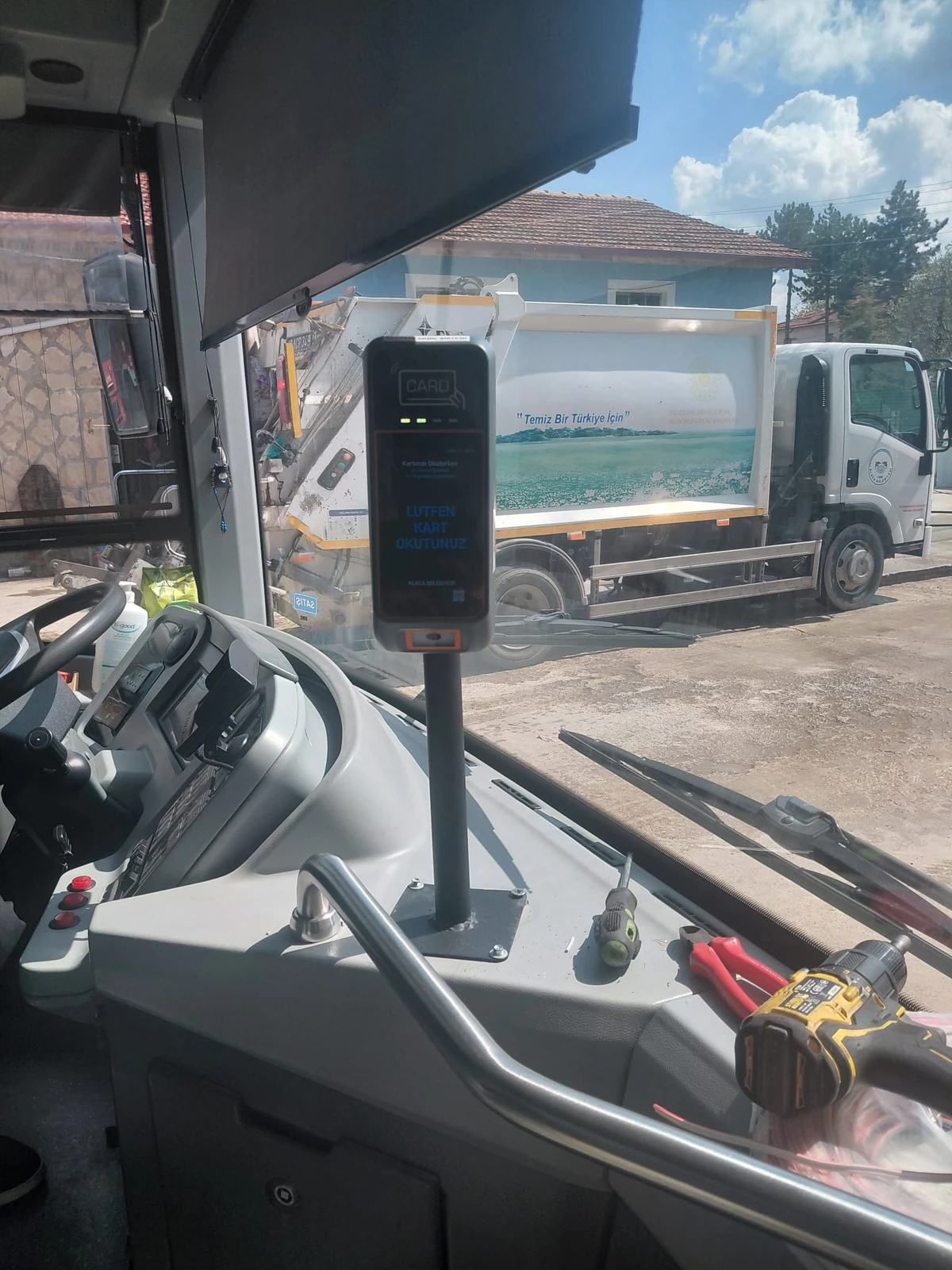
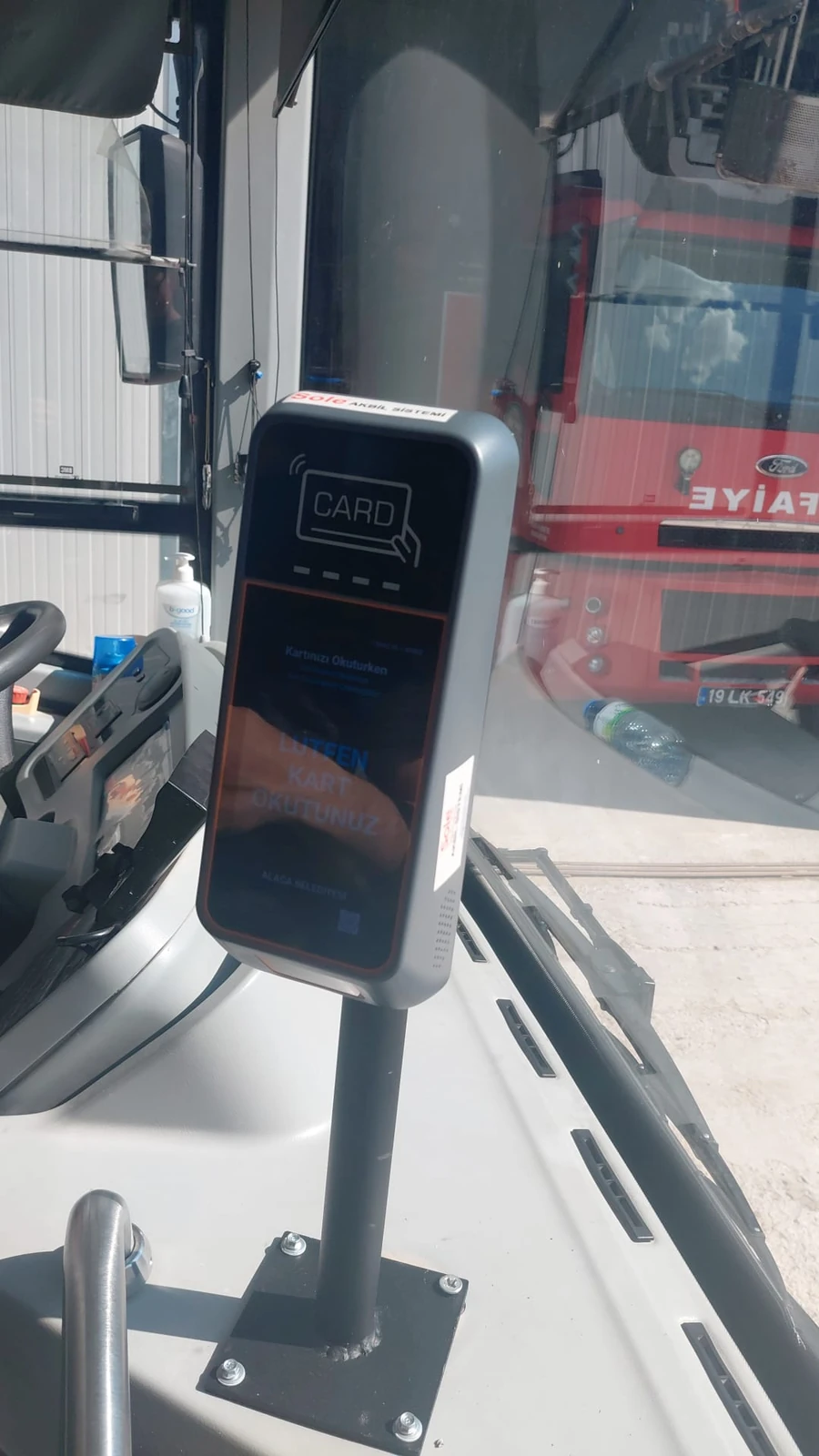
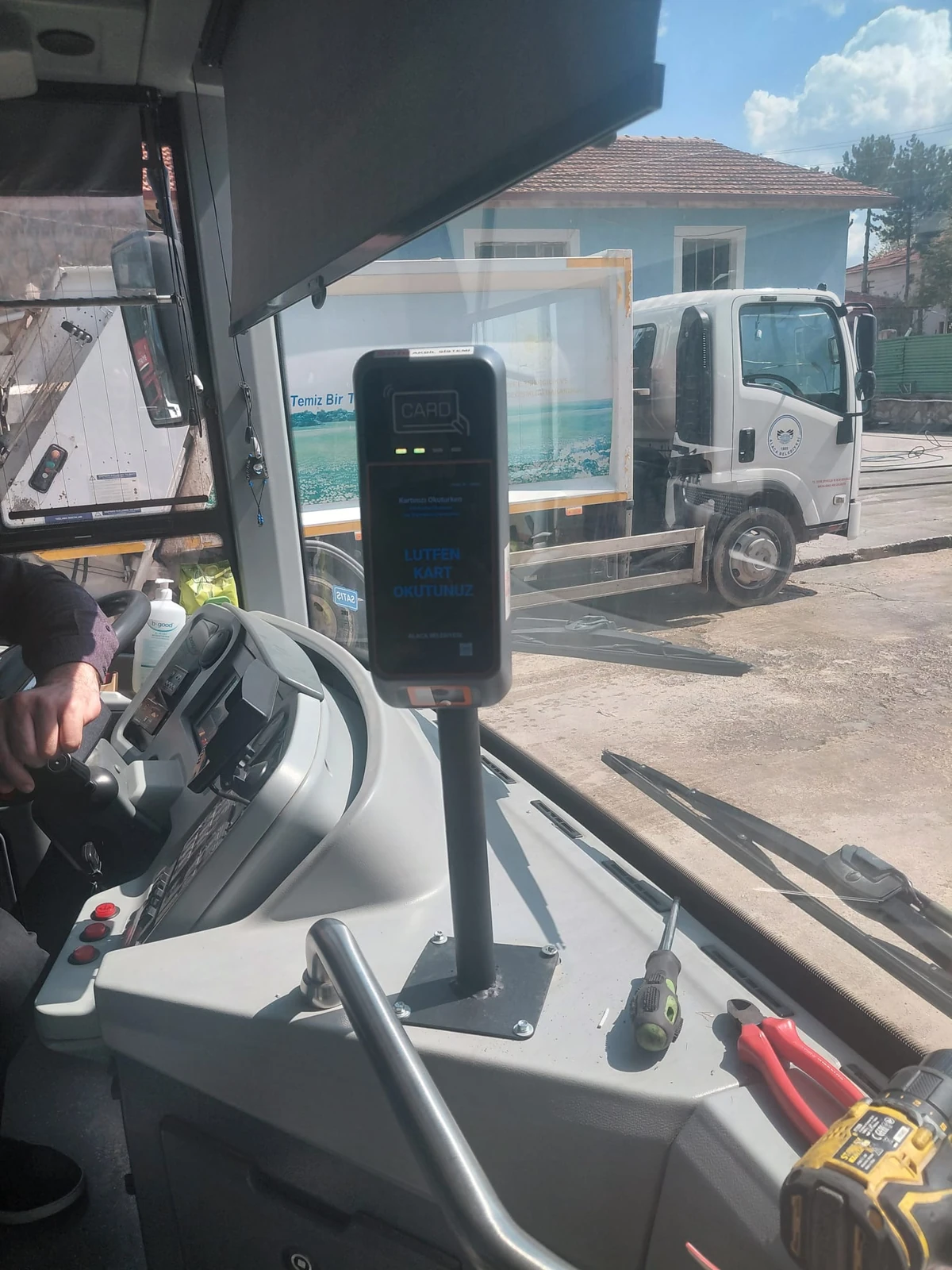
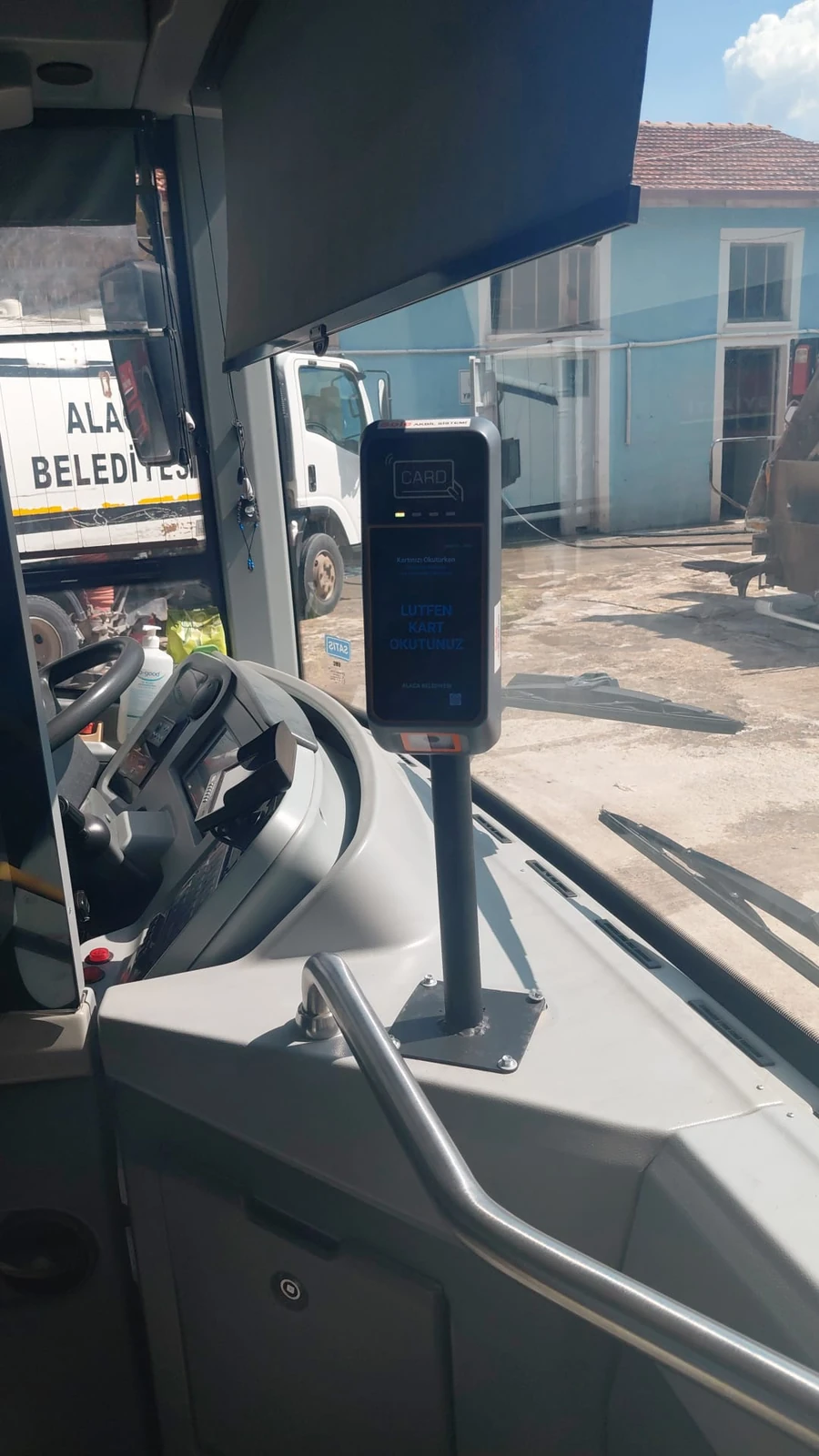
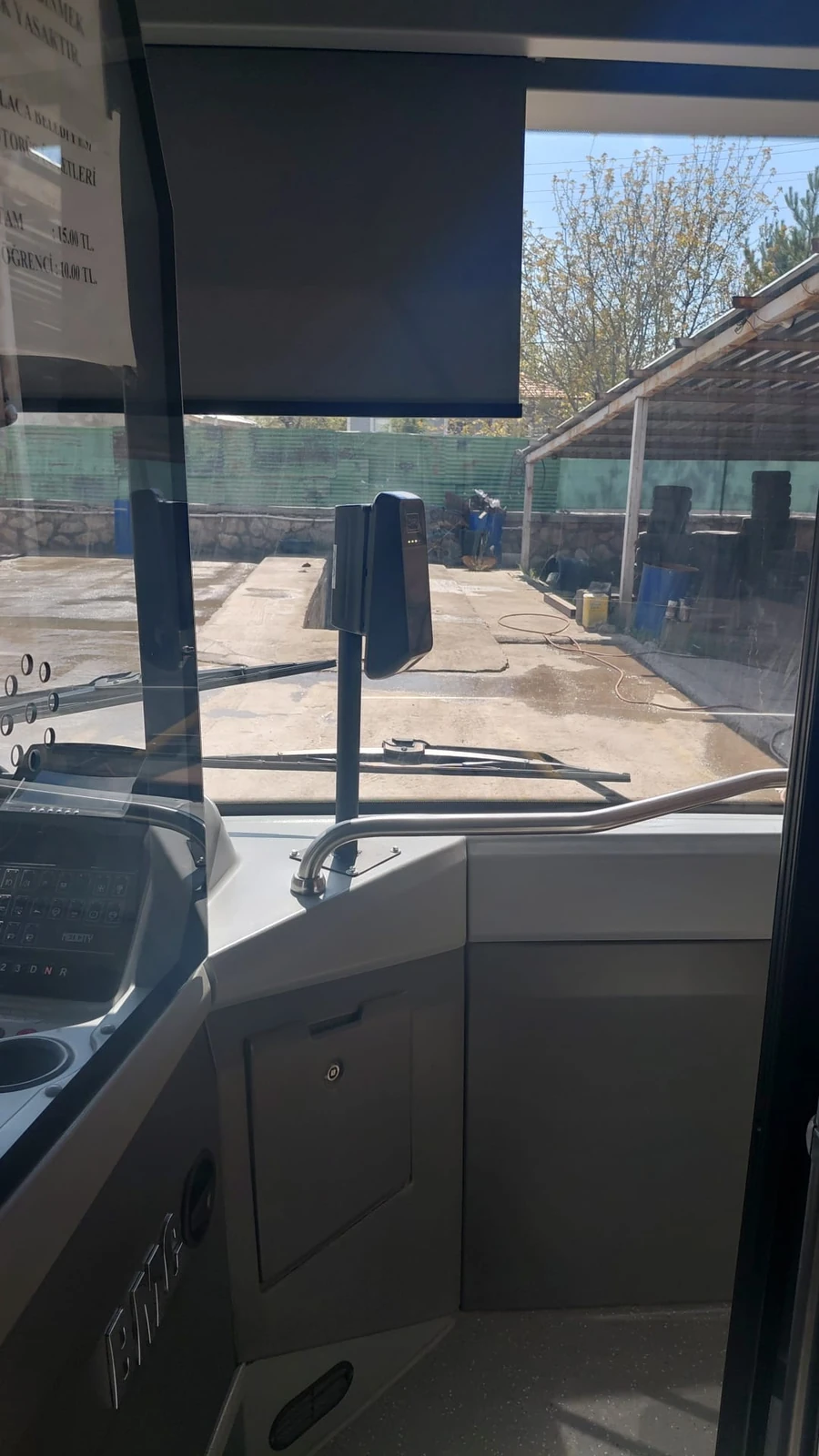
- Vehicle layer: A Sole validator was mounted on a post overlooking the door in each vehicle. The fare is not calculated on the device; it is read from the tariff defined for the card type, and the result is announced to the passenger on screen and by voice.
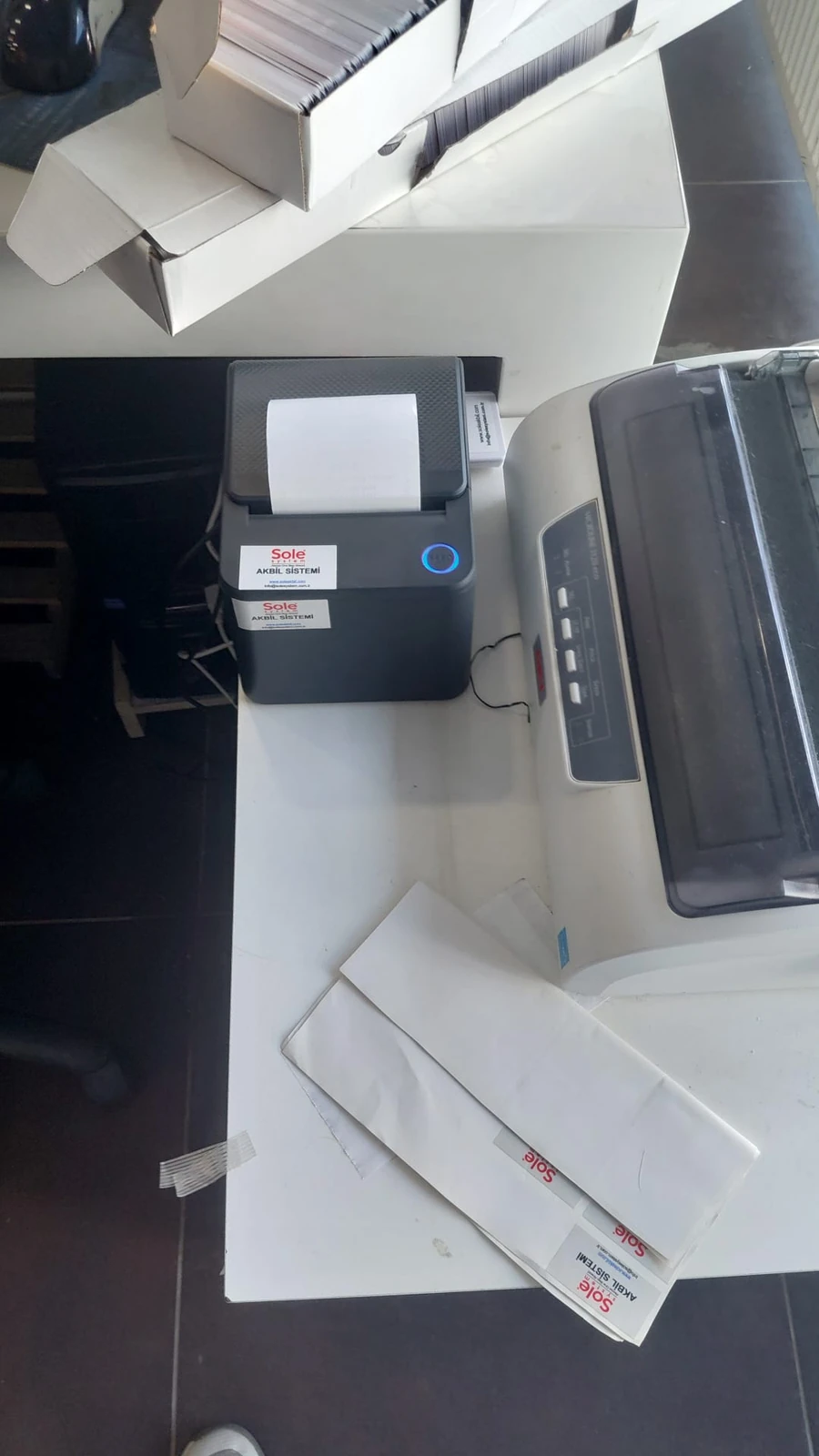
- Top-up layer: The top-up point has a thermal receipt printer. Every balance load is printed to a receipt on the spot, and the citizen leaves with proof of the transaction. Money never changes hands inside the vehicle.
- Central layer: Full fare, student and free travel card types and their tariffs are defined in the central software. Even if a vehicle loses connectivity it accepts the passage and relays it once the connection returns.
Every transaction being traceable
Every boarding is recorded with card, vehicle, time and tariff, and every top-up is matched to a receipt number. Both ends of the chain are therefore documented: when money was loaded onto the card and where it was spent can each be seen separately. When a balance is disputed, the record itself is examined. The balance on a lost card can be frozen and transferred to a new one.
The benefit delivered
- The return on the fleet investment can be measured. The real passenger numbers carried by the new vehicles are reported.
- Every top-up is documented. Thanks to the printed receipt, balance disputes are resolved from records rather than declarations.
- The three tariffs separate automatically. Full fare, student and free passages are reported individually; the decision is not left to the driver.
- The driver only drives. Taking money and giving change left the vehicle, and waiting at stops shortened.
- Tariff updates from a single point. Fare changes are made centrally, without visiting vehicles one by one.
Carrying the card beyond transport
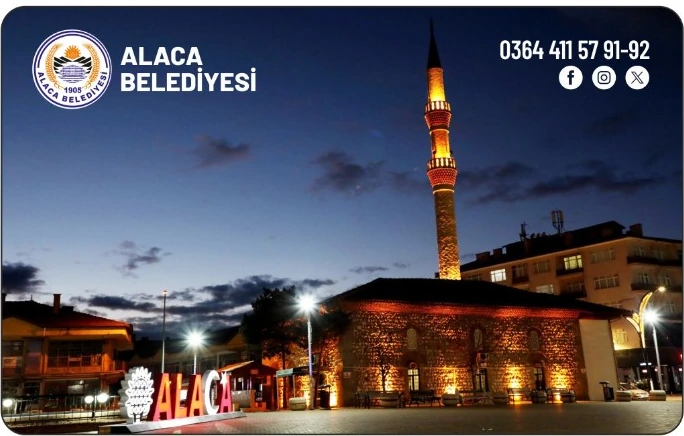
In Alaca the back of the card was designed with the district's own photographs, so the card stopped being a ticket and became a piece of promotion carried in the pocket. Its functional side points the same way: the same card can later be used at a sports facility entrance, a cultural centre, a public canteen or a library. Because each service is defined and reported separately in the system, every point at which the municipality meets the citizen is tied to a single identity.
Card designs
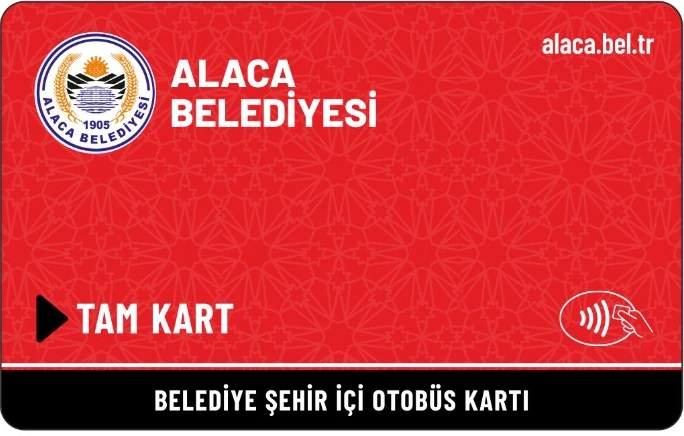
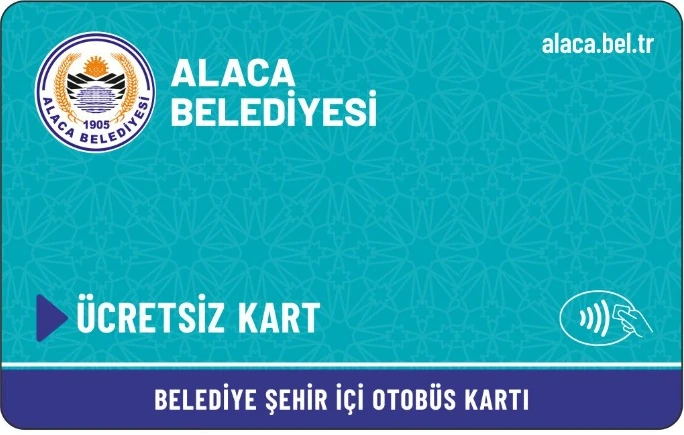
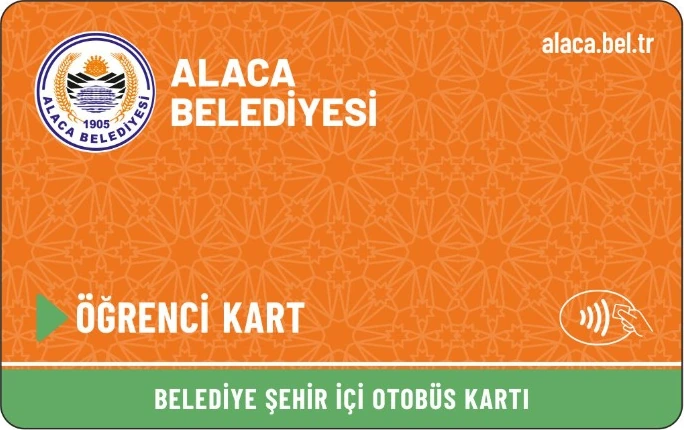
Three card types were printed for Alaca Municipality and colour-coded by tariff: red for the full fare card, turquoise for the free travel card, orange for the student card. The backs were designed with the district’s own photographs (the historic mosque and its square, the municipal building, the town park) and carry the municipality’s telephone number and social media accounts.